


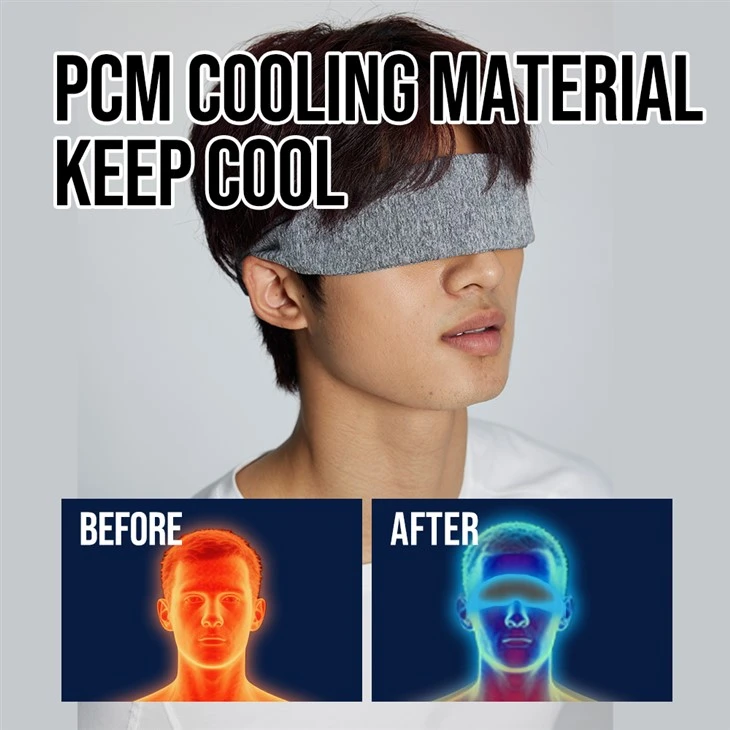
In the sectors of occupational safety, sports medicine, and personal thermal management, mitigating cranial heat stress is a critical physiological requirement. Enclosed environments, high ambient temperatures, and intense physical exertion rapidly elevate core body temperatures, leading to cognitive fatigue and heat-related illnesses. To scientifically counter this, deploying a highly engineered PCM Cooling Headband provides a passive, dry, and safe thermal buffering solution, marking a significant technological leap over traditional evaporative fabrics and standard ice packs. This whitepaper examines the thermodynamics, material engineering, and stringent manufacturing standards driving the modern cooling headgear industry.
1. Thermodynamic Evolution: Moving Beyond Gel and Evaporation Historically, thermal management relied on evaporative cooling fabrics or high-density gel packs. However, these legacy systems possess critical limitations. Evaporative cooling fails completely in high-humidity environments, leaving the user damp and uncomfortable. Gel packs require sub-zero freezing, which induces vascular constriction (cold shock) and generates hazardous surface condensation.
Advanced Phase Change Material (PCM) technology resolves these mechanical flaws. Utilizing latent heat of fusion, bio-based PCM absorbs massive amounts of metabolic heat while maintaining a constant, mild temperature (typically 18°C or 28°C). For targeted applications, such as mitigating hyperthermia or severe environmental heat, the Fever PCM Cooling Head Wrap offers precise thermal extraction without shocking the sympathetic nervous system, ensuring absolutely dry and consistent cooling.
2. Material Encapsulation and Ergonomic Biocompatibility The efficacy of a PCM cooling device relies heavily on its structural encapsulation. Industrial-grade PCM must be hermetically sealed within a high-density TPU (Thermoplastic Polyurethane) casing. TPU is an inert, medical-grade polymer that provides unparalleled biocompatibility, zero porosity, and supreme resistance to abrasive wear.
Ergonomics also plays a pivotal role in maintaining optimal thermal contact with the skin. Designed to accommodate diverse demographic anatomies, specialized models like the PCM Women's Cooling Headband feature optimized volumetric ratios and adjustable structures. This ensures that the high-frequency welded seams remain intact under mechanical stress while providing a secure, comfortable fit that maximizes conductive heat transfer.

3. Advanced Manufacturing and Quality Assurance Standards The transition from conceptual thermodynamics to a reliable commercial product requires state-of-the-art manufacturing infrastructure. Leading source factories, such as Hangzhou Yingqian Trading Co., Ltd. (Megacoolpro), define the global benchmark for PCM product fabrication. The production process strictly mandates automated high-frequency (HF) seamless welding to guarantee 100% leak-proof integrity under extreme pressure.
Furthermore, comprehensive quality control systems involve rigorous thermodynamic cycle testing (solid-to-liquid-to-solid) to ensure the PCM matrix does not chemically degrade over tens of thousands of uses.
Conclusion and OEM Procurement The integration of Phase Change Materials into wearable headgear represents the apex of passive temperature regulation. By eliminating the hazards of condensation and cold shock, PCM technology ensures safety, hygiene, and sustained performance. For B2B procurement managers, occupational safety organizations, and global retail brands, partnering with a technologically advanced source manufacturer guarantees access to superior thermal solutions. We invite industry professionals to consult our engineering team at Megacoolpro for OEM customization, bespoke thermodynamic specifications, and scalable global supply chain strategies.