


In the realm of extreme outdoor powersports, particularly All-Terrain Vehicle (ATV) riding, mitigating convective heat loss is a critical factor for both operator safety and performance. ATV riders are continuously subjected to high-velocity wind chill and rapidly dropping ambient temperatures. Prolonged exposure without active thermal management can lead to peripheral vasoconstriction, delayed reflex times, and mild hypothermia. As a specialized manufacturer of advanced wearable heating technology, this technical paper analyzes the thermodynamic principles, safety requirements, and material engineering necessary for deploying heated apparel in high-intensity off-road environments.
1. Thermodynamic Layering and Active Core Heating In professional outdoor apparel systems, a heated vest functions strictly as an active mid-layer. Its primary objective is to maintain core body temperature without adding restrictive bulk that could impede the rider's maneuverability. For standard ATV excursions, integrating a Lightweight Unisex Heated Vest beneath a windproof and waterproof outer shell creates an optimal microclimate. The outer shell blocks the convective cooling of the wind, while the lightweight vest actively generates thermal energy, drastically reducing the metabolic strain on the rider's body.
2. Carbon Fiber Integration and Dynamic Fit The mechanical stress of ATV riding-characterized by high-frequency vibrations and sudden impacts-demands highly resilient internal components. Legacy metallic heating wires are obsolete and pose a severe risk of fatigue fracture and short-circuiting. Modern industrial-grade heated apparel exclusively utilizes composite Carbon Fiber heating elements. These micro-fibers offer exceptional tensile strength and flexibility, ensuring unbroken circuits even under extreme physical contortion.
Furthermore, because ATV riders often wear varying levels of impact armor (chest protectors, spine guards), the thermal garment must adapt seamlessly. Deploying an Adjustable Heated Vest allows operators to customize the garment's girth. This ensures the carbon fiber heating panels maintain close proximity to the user's torso-a fundamental requirement for efficient conductive heat transfer-regardless of the underlying protective gear.
3. Industrial-Grade Durability and Weather Resistance The environmental variables encountered in off-road powersports (mud, high humidity, and abrasive debris) necessitate rugged construction. The engineering standards applied to extreme occupational safety gear often crossover into premium sports equipment. By applying the heavy-duty material specifications found in our Heated Vest for Construction Workers, we ensure that our powersports models possess superior abrasion resistance and IPX-rated water resistance. While the vest is not a substitute for a waterproof outer jacket, its internal electrical matrices are hermetically sealed to prevent moisture-induced short circuits.

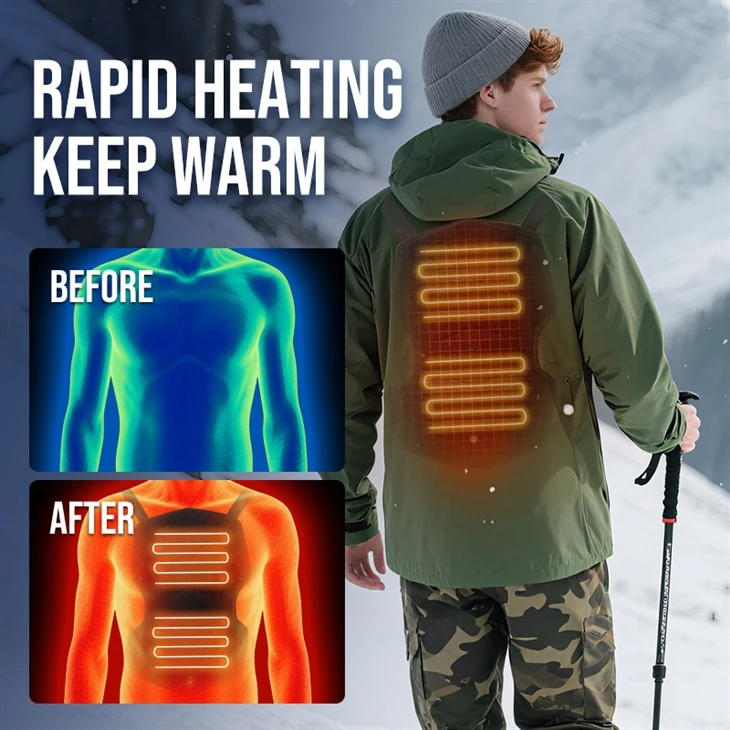
4. Intelligent Power Management and Impact Safety Battery safety is paramount in motorsports. High-quality heated vests are powered by lithium-polymer power banks equipped with Intelligent Temperature Control systems (NTC thermistors). These systems automatically regulate pulse-width modulation (PWM) to prevent thermal runaway. Additionally, the power sources must be housed in impact-resistant casings and positioned in strategic, low-impact zones to mitigate the risk of battery puncture during an ATV collision.
Conclusion and B2B Procurement The integration of active heating technology into ATV riding gear represents a significant advancement in rider safety and endurance. By relying on highly flexible carbon fiber elements, rigorous IPX water-resistance standards, and intelligent safety modules, manufacturers can provide uncompromising thermal protection. As a premier source manufacturer, we engineer our heated apparel to the highest global safety and performance standards. We invite powersports distributors and outdoor gear retailers to consult our technical team for OEM customization and bulk procurement strategies tailored to the extreme demands of the off-road market.