

In the selection of high-temperature protective gear for summer, liquid cooling vests, air-conditioned vests, and semiconductor cooling vests currently form the three main technological approaches. Each solution is based on different physical principles, possessing irreplaceable advantages and the most suitable application scenarios. Among them, liquid cooling vests demonstrate core value, particularly in some demanding work environments, due to their exceptional stability, powerful cooling capacity, and broad adaptability.
The advantage of liquid cooling vests is rooted in their direct and efficient physical cooling mechanism. Through built-in circulating pipelines, they continuously and evenly deliver the low temperature of cold water or ice water to the main torso areas, achieving extensive heat exchange with the body surface. This method provides strong and direct cooling effects, with its most significant feature being that its performance is almost unaffected by external environmental humidity.
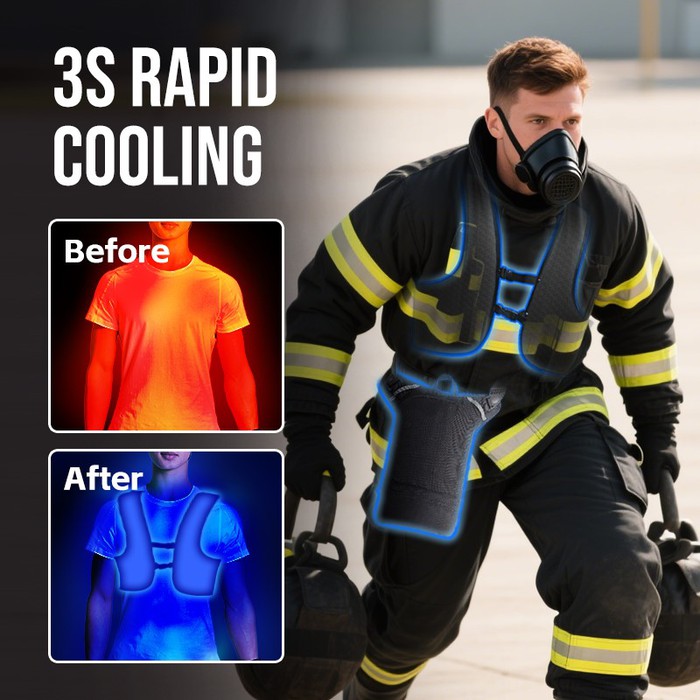
Whether in humid and stuffy workshops, kitchens, or poorly ventilated confined spaces-when the fans of air-conditioned vests blow hot air due to saturated air, and semiconductor vests may see reduced effectiveness due to decreased heat dissipation efficiency-liquid cooling vests can still provide stable and reliable low-temperature comfort. Their coolness stems from a tangible cold source, not reliance on air evaporation, and this reliability is their most prominent advantage. Furthermore, a well-designed liquid cooling system with an adequate cold source can operate continuously for several hours, offering prolonged protection with minimal operating noise.
Meanwhile, the advantage of air-conditioned vests lies in their lightweight design and active ventilation. They use fans to promote airflow, accelerating sweat evaporation. In hot but relatively dry, well-ventilated outdoor environments, they provide a dry and refreshing comfort, require no water tank, and allow greater freedom of movement. Semiconductor cooling vests excel in their plug-and-play convenience and quiet operation. They use electrical energy to drive semiconductor chips for rapid cooling, making them suitable as flexible supplements in scenarios requiring quick cooling, quiet environments, and convenient access to power.

However, in head-to-head comparisons under extreme conditions, the robustness of liquid cooling vests becomes particularly evident. Facing the dual challenges of high temperature and high humidity, complex working conditions with high dust levels (which can damage fans or clog heat dissipation ports), or workplaces requiring absolute quiet, liquid cooling vests are often the more professional and reliable choice. Although they require preliminary preparation of a cold source and basic maintenance, this is traded for persistent and powerful cooling protection throughout the work period that does not depend on ambient air conditions and is undeterred by dust.
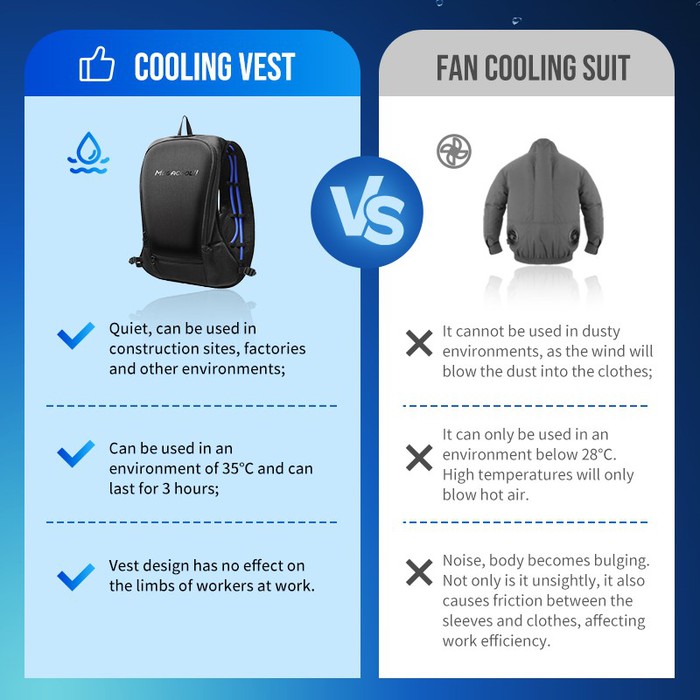
Therefore, choosing which type of equipment is not a simple matter of good or bad, but rather a precise match based on the work environment. For regular outdoor operations, the lightweight ventilation of an air-conditioned vest may suffice. For short-term, intermittent indoor cooling needs, semiconductor vests offer flexibility and convenience. However, if your work consistently faces challenges such as sustained high temperatures, high humidity, high dust levels, or requirements for low noise, then the stable, powerful, and environmentally independent cooling capability provided by liquid cooling vests will make them a solid line of defense for ensuring work efficiency and physical health. They represent a professional solution based on solid physical principles to cope with extreme conditions-a trustworthy partner in the enduring battle against intense heat.