

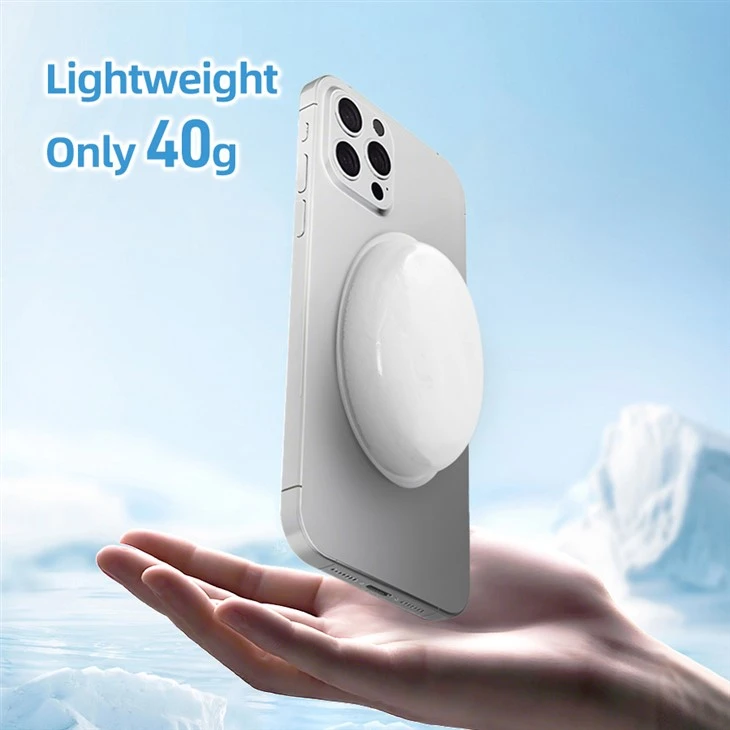
The weight of a phone cooling pad is an important consideration when selecting a portable smartphone cooling solution. Whether used for mobile gaming, video recording, livestreaming, or everyday smartphone applications, a cooling accessory should provide effective thermal management without adding unnecessary bulk or compromising handling comfort.
However, the weight of a phone cooling pad varies depending on its cooling technology, material composition, dimensions, and structural design. Understanding these factors can help buyers select a product that balances portability and cooling performance.
1. What Is a Phone Cooling Pad?
A phone cooling pad is a compact thermal management accessory designed to absorb or dissipate heat generated by a smartphone during operation.
Different products use different cooling technologies, including passive cooling materials and active fan-assisted systems.
One option is a PCM (Phase Change Material) cooling pad. PCM absorbs thermal energy during its transition from a solid to a liquid state. During this phase-change process, it can absorb heat within a relatively stable temperature range without requiring electricity, batteries, or moving components.
Compared with conventional fan-based coolers, passive PCM cooling pads have a simpler structure, making them suitable for applications where low weight, portability, and silent operation are important.
2. What Determines the Weight of a Phone Cooling Pad?
There is no universal weight specification for phone cooling pads. Their actual weight depends on several design and manufacturing factors.
PCM Filling Capacity
The quantity of PCM directly influences the overall product weight and its potential heat absorption capacity. A greater PCM filling quantity generally provides more thermal storage capacity, although the relationship between weight and cooling performance also depends on the material's thermal properties.
Product Dimensions
Larger cooling pads may require more PCM filling and additional outer material. Therefore, dimensions should be considered alongside weight when evaluating products for different smartphone models.
Outer Casing Materials
The housing material contributes to the overall weight, flexibility, and durability of the product. Materials such as TPU are commonly used in portable cooling accessories because they offer flexibility and can accommodate compact product designs.
Attachment Structure
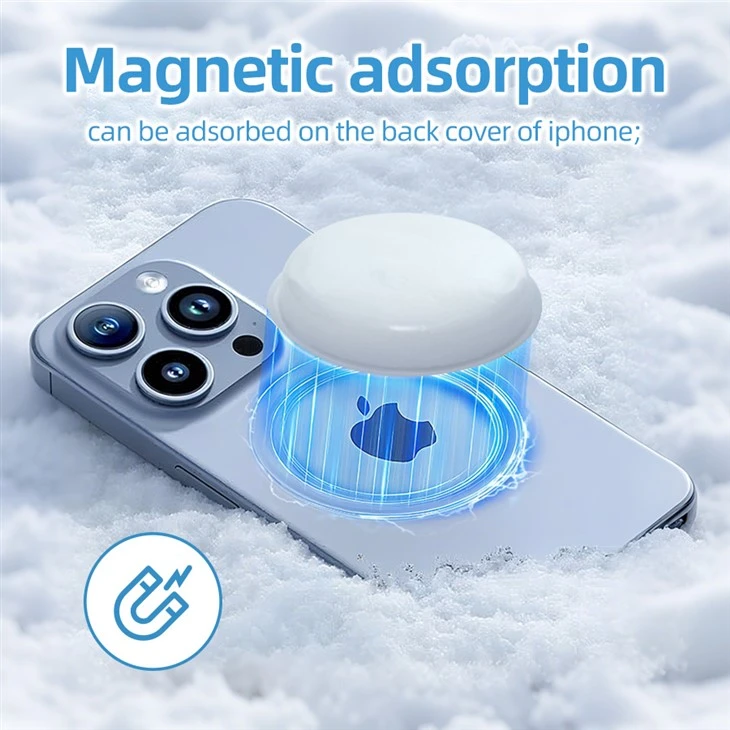
Magnetic components, adhesive layers, and additional mounting structures can also affect the final product weight. Their design should balance secure attachment with convenient installation and removal.
For buyers sourcing phone cooling pads in bulk, requesting product dimensions, filling capacity, and actual sample weight is recommended before confirming specifications.
3. Does a Heavier Phone Cooling Pad Provide Better Cooling Performance?
Not necessarily. Product weight alone is not a reliable indicator of cooling efficiency.
For PCM-based cooling pads, thermal performance is influenced by several technical parameters:
PCM thermal properties: Latent heat capacity determines how much energy the material can absorb during its phase transition.
PCM quantity: A larger filling capacity generally increases the total available heat absorption.
Phase change temperature: The selected temperature range affects the cooling characteristics and suitability for different applications.
Thermal contact: The contact area and interface between the cooling pad and smartphone influence heat transfer efficiency.
Operating conditions: Ambient temperature, smartphone workload, and initial PCM temperature affect actual performance.
A lightweight product with appropriately selected PCM may offer a better balance of portability and thermal performance than a heavier product with an unsuitable material configuration.
Therefore, buyers should evaluate cooling capacity, product construction, and intended application rather than comparing products by weight alone.
4. PCM Phone Cooling Pads vs. Fan-Based Phone Coolers
PCM cooling pads and fan-based phone coolers use different approaches to smartphone thermal management.
| Comparison | PCM Cooling Pad | Fan-Based Phone Cooler |
|---|---|---|
| Cooling technology | Passive heat absorption | Active airflow |
| Power requirement | No external power required | Usually requires electricity |
| Moving components | None | Fan and motor |
| Operating noise | Silent | May produce fan noise |
| Product structure | Relatively simple | Includes additional mechanical components |
| Maintenance | Requires reconditioning after thermal capacity is used | Depends on power supply and product design |
Some advanced fan-based coolers also incorporate thermoelectric cooling technology, which differs from conventional airflow-only designs.
PCM cooling pads are particularly suitable for users who prioritize silent operation, simple construction, and portability. Fan-assisted products may be more appropriate for applications requiring continuous active heat dissipation.
The choice depends on the smartphone's thermal load, usage duration, and the user's cooling requirements.
5. Does a Phone Cooling Pad Affect Wireless Charging?
Wireless charging compatibility is another important consideration when selecting a magnetic phone cooling accessory.
A cooling pad may interfere with wireless charging depending on its thickness, magnetic structure, installation position, and the location of the smartphone's wireless charging coil.
Magnetic attachment does not automatically guarantee MagSafe or Qi compatibility.
Before purchasing, users should check the product's dimensions and magnetic arrangement against their specific smartphone model. In some configurations, removing the cooling pad before wireless charging may be necessary.
For manufacturers and distributors developing customized phone cooling accessories, evaluating magnetic positioning and wireless charging compatibility during the product design stage is particularly important.
6. Megacool Phone Cooling Pad Product Options
Megacool provides reusable PCM-based phone cooling solutions for smartphone users, mobile gaming applications, and electronics accessory brands.
The following products offer different options for portable smartphone cooling.
This phone cooling pad features a TPU outer structure, PCM filling, and a magnetic attachment design. Its passive cooling mechanism does not require an external power supply or moving components.
It is suitable for smartphone users looking for a compact cooling accessory for mobile gaming, video recording, livestreaming, and other applications that generate additional device heat.
Designed as a reusable smartphone cooling accessory, this model combines PCM cooling technology with a flexible TPU structure and magnetic attachment.
Its compact construction makes it suitable for portable applications where convenient installation and battery-free operation are preferred.
3. Phone Ice Pad Product Collection
For distributors, wholesalers, and brands looking for additional product options, Megacool's phone cooling pad collection provides a starting point for exploring different designs and specifications.
Customization can be discussed according to project requirements, including product dimensions, PCM specifications, colors, magnetic structures, and branding.
7. How to Select the Right Phone Cooling Pad
Selecting a suitable phone cooling pad requires evaluating more than its weight. Buyers should consider the following factors:
Smartphone compatibility: Check the product dimensions and attachment method against the intended phone models.
Cooling requirements: Consider the smartphone's typical workload and the expected heat generation.
Material specifications: Evaluate the PCM type, phase change temperature, and filling capacity.
Portability: Consider the overall dimensions, weight, and installation structure.
Product quality: Review material consistency, sealing performance, attachment reliability, and manufacturing quality.
For businesses sourcing cooling accessories, sample evaluation is particularly useful for confirming product dimensions, actual weight, attachment performance, and suitability for the target market.
Conclusion
The weight of a phone cooling pad is determined by its materials, PCM filling capacity, dimensions, and structural design. While lightweight construction improves portability, effective thermal management also depends on the PCM's properties and the product's overall design.
For smartphone accessory brands and distributors, selecting the right balance between weight, cooling capacity, and compatibility is essential when developing a competitive product range.
Megacool specializes in PCM cooling products and customized thermal management solutions. We support OEM and ODM projects for businesses seeking customized phone cooling accessories, including different product specifications, designs, materials, and branding options.