


As high temperatures continue to affect many regions around the world, workers in construction, manufacturing, agriculture, logistics, landscaping and outdoor industries are facing increasingly demanding working conditions. For people who spend long periods outdoors or in hot environments, heat can affect not only comfort but also their ability to maintain consistent performance throughout the working day. As a result, flexible personal cooling solutions are attracting growing attention.
Traditional cooling methods often rely on air conditioning, fans or fixed cooling equipment. However, these systems are not always practical for workers who need to move continuously or operate far away from fixed cooling facilities. This has created new opportunities for wearable cooling products, including cooling vests, PCM garments and neck-cooling devices.
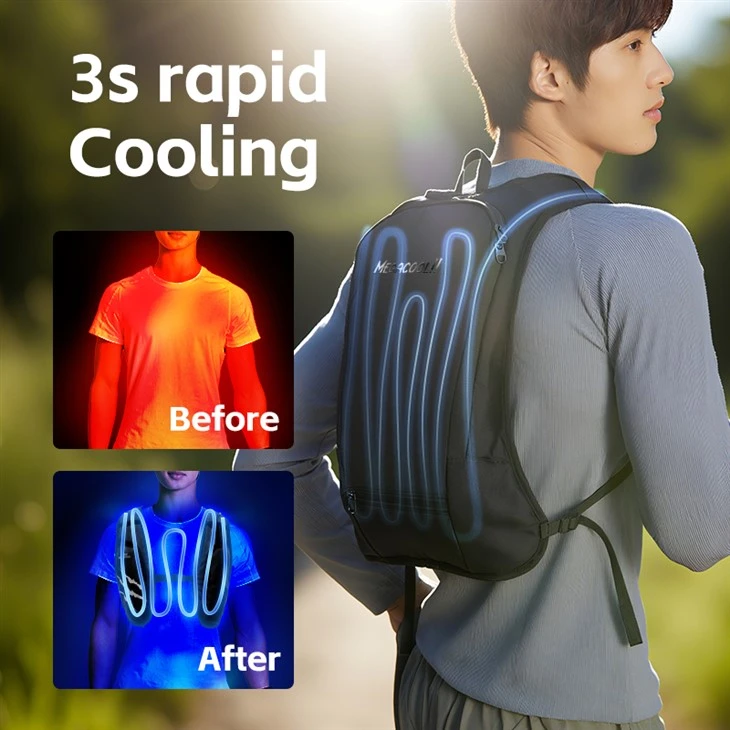
For workers exposed to high temperatures for extended periods, continuous cooling can be particularly valuable. Megacool's Water Liquid Cooling Suit uses ice-water circulation technology. A compact pump circulates chilled water through flexible channels inside the vest, allowing the cooling system to absorb heat from multiple areas around the upper body. According to Megacool, the system can provide approximately 3–4 hours of cooling under suitable conditions and offers three adjustable cooling settings. It is designed for applications including construction, manufacturing, equipment maintenance, agriculture and outdoor work.
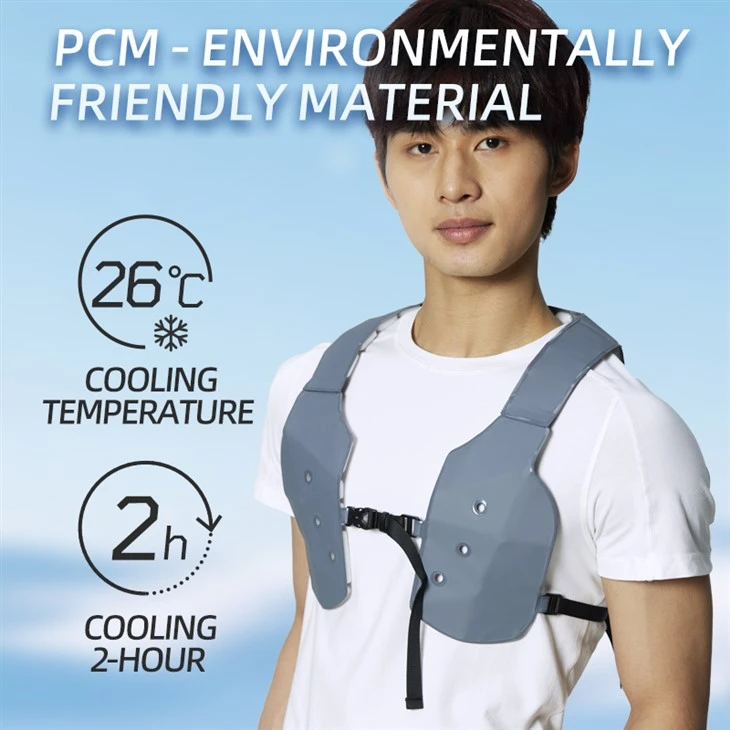
PCM technology offers another approach to wearable cooling. Phase change materials absorb heat as they transition between solid and liquid states, allowing the cooling material to maintain a relatively stable temperature during the phase-change process. Megacool's PCM Ice Vest for Humans uses adjustable PCM technology, with phase-change temperatures available at 18°C, 24°C, 26°C and other customized options. The vest provides approximately 1.5–2 hours of cooling and is designed for high-temperature work, hiking, travel, camping and outdoor activities.
One of the advantages of PCM cooling is its portability. Unlike liquid-circulation systems, it does not require a continuous connection to a pump or external power source. This makes it suitable for users who need to move frequently, including construction workers, athletes, cyclists and travelers.
Cooling technology is also expanding beyond the torso. The neck is another area where compact wearable cooling products can provide convenient support. Compared with full-body cooling garments, neck-cooling products are smaller and easier to carry, making them suitable for shorter outdoor activities and everyday use. Megacool's Bendable Cooling Ring Around Neck uses PCM material combined with a flexible TPU structure. It is designed to be worn around the neck and can provide approximately 1.5–2 hours of cooling under suitable conditions, with applications including outdoor work, sports and physical training.
Different environments require different approaches to personal cooling. Extended and physically demanding work in high temperatures may benefit from a liquid-circulation system, while shorter outdoor activities may favor a lightweight PCM solution. For users who prioritize portability and minimal equipment, a compact neck-cooling product can provide another practical option.
As hot-weather conditions and outdoor work continue to create new challenges, wearable cooling technology is developing from a seasonal consumer product into a more specialized personal temperature-management solution. Future development will focus not only on cooling performance, but also on cooling duration, weight, comfort, freedom of movement and suitability for different working environments.
For employers, wearable cooling products should also be considered as part of a broader approach to managing heat exposure. Access to drinking water, appropriate rest periods, work scheduling and ventilation remain important measures in hot working environments. Wearable cooling technology can complement these practices by providing workers with a more flexible form of personal temperature management without requiring access to a fixed cooling space.
As material science and wearable technology continue to advance, personal cooling solutions are likely to find applications across an even wider range of industries. From construction sites and manufacturing facilities to agriculture and outdoor sports, wearable cooling technology is helping users respond to hot environments while moving the industry toward more professional, application-specific temperature-management solutions.