


When racing governing bodies, such as the FIA, declare a 'heat hazard' ahead of a major summer Grand Prix weekend, the physical toll on drivers becomes the primary concern for every team on the grid. With cockpit temperatures frequently exceeding extreme limits, professional racing teams can no longer rely on passive ventilation or traditional cooling methods. To maintain peak cognitive function, prevent thermal exhaustion, and ensure driver safety, integrating high-performance active cooling is now an absolute necessity.
But what exactly does a 'heat hazard' mean for the teams and drivers, and how is modern thermal management technology solving this crisis? Here is a comprehensive look into the advanced systems keeping drivers safe.
What is a 'Heat Hazard' Declaration?
The push for stricter thermal regulations stems from extreme weather conditions experienced during events like the 2023 Qatar Grand Prix, where extreme heat and humidity pushed drivers to their absolute physiological limits. Following intense analysis into how similar situations could be managed safely, governing bodies established clear protocols.
Now, a 'heat hazard' can be officially declared if pre-weekend weather forecasts predict ambient temperatures of 31°C (87.8°F) or above at any point during a race. Once declared, teams are strongly encouraged-and in some regulations, mandated-to fit a specialized 'Driver Cooling System'.
The Physiological Challenge: Just How Hot Does It Get?
During a mid-summer race, ambient air temperatures above 30°C quickly translate to cockpit temperatures soaring well over 50°C (122°F). Drivers are wrapped in multi-layer, fire-retardant Nomex suits while experiencing continuous G-forces, leading to massive metabolic heat production. This causes extreme sweating, cardiovascular drift, and potential cognitive decline.
To combat this intense physiological strain, we have engineered the ultimate thermal management solution: the Water Liquid Cooling Suit. Designed specifically for the punishing environments of professional motorsports, this suit provides rapid core temperature stabilization, ensuring that professionals stay cool, hydrated, and hyper-focused when the heat index spikes.
What is the Modern 'Driver Cooling System'?
In short, a modern Driver Cooling System is defined as a closed-loop thermal regulation network with the sole purpose of providing active, continuous cooling under extreme heat hazard scenarios.
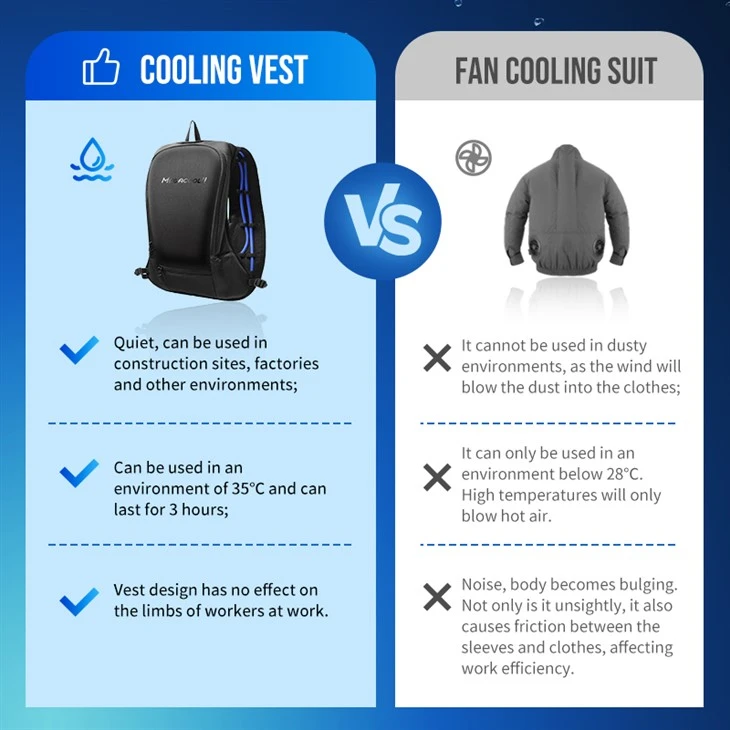
Historically, combating heat meant relying on heavy ice packs that melted quickly. Today, the system is vastly more sophisticated. For drivers who require maximum upper-body mobility without sacrificing thermal extraction, outfitting them with our ultra-lightweight Ice Water Cooling Vestensures that chilled fluid is distributed efficiently across the torso. This extracts heat continuously through a dense network of fireproof micro-tubes.

Additionally, for mechanics in the pit lane enduring the same scorching temperatures, or for drivers preferring alternative setups, integrating our specialized PCM Cool Vest provides robust thermal protection. This specialized vest extracts heat continuously through a dense network of micro-channels, completing a comprehensive thermal defense strategy for the entire racing team.
Precision Engineering: The "Fail-Safe" Advantage
A common concern among drivers is the reliability of the system. Some fear that if a traditional cooling vest fails or the pump breaks down, the suit could act as an insulator, making the driver even hotter.
We have completely engineered this flaw out of existence. By utilizing highly breathable, fire-retardant 3D spacer mesh, our cooling garments guarantee that even in a highly unlikely power-loss scenario, the vest maintains passive breathability. It will never trap body heat. The system is designed to complement the driver's natural thermoregulation, not hinder it.
Performance Uncompromised
Adding weight to a race car is always a concern for aerodynamicists and engineers. However, sporting regulations now often dictate that the difference in mass for cooling equipment must be compensated by the fitting of cockpit ballast. This levels the playing field.
The performance benefits of a properly functioning Driver Cooling System far outweigh any minimal mass addition. Teams realize that a cooled driver makes fewer errors, sustains higher G-forces, and maintains precise steering inputs during the crucial final laps of a race.
Conclusion
A heat hazard declaration is no longer a reason to panic; it is an opportunity to out-prepare the competition. By equipping drivers with state-of-the-art liquid cooling garments, racing teams can transform extreme weather into a distinct competitive advantage. Explore our full range of professional thermal management solutions to keep your team running cool under the highest pressure.