

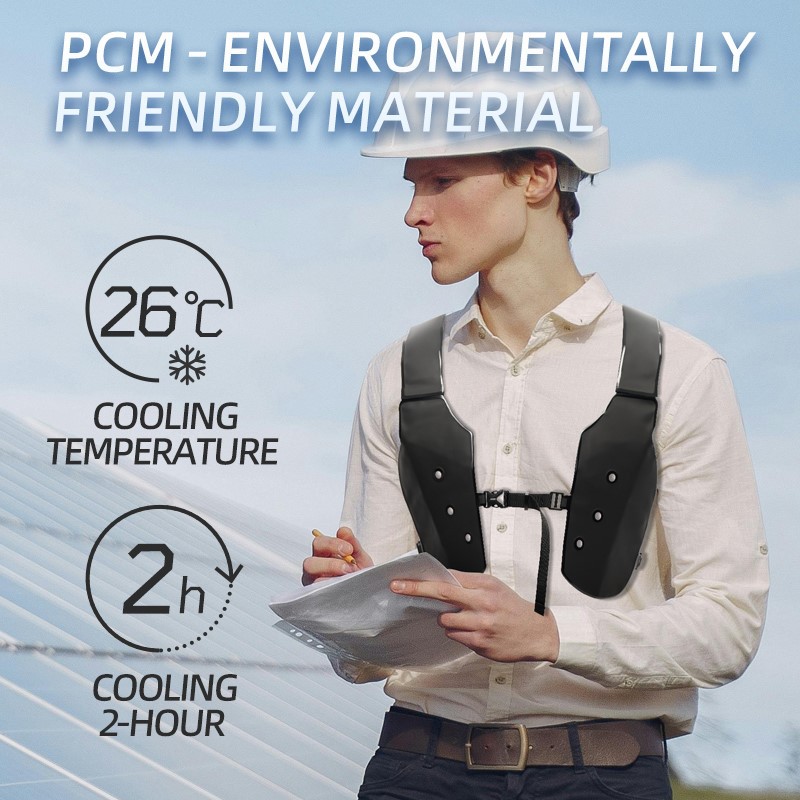
Under the scorching heat, Phase Change Material (PCM) technology is leading a revolution in the cooling sector. By achieving energy storage and release through physical state transitions, it is often referred to as a "space-time capsule for heat." Taking the smart cooling suit by Zhejiang Qinghan Technology as an example, its built-in eco-friendly PCM initiates phase change at 28°C. In a 35°C environment, it can lower the perceived body temperature by 5-8°C for up to 3 hours. Capable of being cycled 500 times, its lifespan far exceeds that of traditional ice packs. The experiment utilized a FLIR T540 thermal imaging camera (640×480 pixel resolution, 0.04°C thermal sensitivity) combined with a K-type thermocouple array to accurately capture the phase change process at the 0.1°C level.
At the microscopic level, PCMs achieve energy conversion through the reconstruction of their crystal structure: when heated, molecular potential energy absorbs heat; when cooled, molecules rearrange to release energy. The entire process involves no chemical reactions, ensuring safety and environmental friendliness. Asphalt pavement experiments show that a 0.5% microcapsule dosage can slow down the temperature decay of the test specimen by 4.1°C in a 6°C environment. With the addition of carbon fibers, the electrical resistivity drops to $1.2 \times 10^{-3} \Omega \cdot \text{cm}$, and thermal efficiency increases by 27%.
Full-scenario applications are already underway:
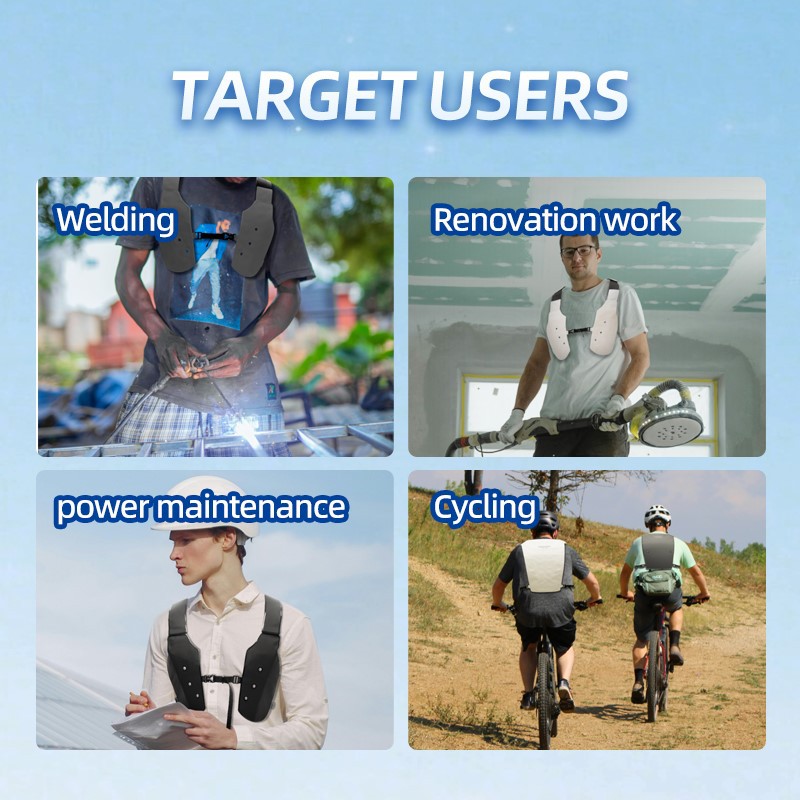
- Wearable Sector: The liquid cooling vests at the Paris Olympics, paired with a three-level temperature control APP, maintained athletes' core body temperatures at 37°C ± 1°C.
- Construction Sector: Olympic Village walls embedded with PCM kept indoor temperature fluctuations within ±2°C, while communities in Hangzhou adopted vanadium dioxide coatings, reducing air conditioning energy consumption by 38%.
- Industrial Sector: Photovoltaic battery packs integrated with PCM stabilized their operating temperature below 45°C, and a factory in Ningxia reduced its AC energy consumption by 43%.
Beware of safety hazards: Some cooling sprays on the market contain flammable gases like propane and butane, where combustible gas concentrations can reach explosive limits within 30 seconds. In contrast, PCM technology achieves safe cooling through mild phase changes; in automotive interior tests, it successfully reduced steering wheel temperatures from 85°C down to 35°C. With breakthroughs in biomass carbon-based PCMs, the spoilage rate in fruit and vegetable cold chains has dropped significantly. Furthermore, following the civilian adaptation of aerospace-grade phase-change radiation panel technology, the sprint distance of athletes in the Qatar league increased by 23%. PCM technology is forging a new paradigm for energy interaction between humans, machines, and the environment, transforming buildings, clothing, and roads into "breathing" temperature control systems.