

As extreme heat becomes more common, demand for personal cooling equipment is rising across outdoor work, construction, warehousing, landscaping and other physically demanding environments. Compared with fan jackets, ice-pack vests and conventional cooling garments, water cooling vests are gaining attention because they provide active and continuous cooling support.
In recent years, the structure of wearable water cooling systems has also been evolving. Traditional water cooling vests usually rely on round tubing, where chilled water circulates through the garment to cool the chest, back and core torso area. This design is mature and reliable, but cooling coverage, tube pressure, local cold spots and overall fit can still affect long-term wearing comfort.
From Tube Cooling to Flat Waterway Cooling
A new direction in water cooling apparel is the shift from traditional tube-based cooling to flatter waterway or surface-cooling structures. Flat-surface cooling does not mean removing all tubes or connectors. Instead, it uses flatter water channels, flexible cooling panels or micro-channel layouts to distribute cooling more evenly across the back or core torso area.
The key challenge is balancing cooling efficiency, sealing reliability and body movement. A well-designed flat waterway structure should allow chilled water to flow evenly across a larger contact area while avoiding excessive thickness, stiffness or water accumulation. For workers who bend, lift, climb or operate tools for long periods, flexibility is just as important as cooling power.
Ventilation also needs to be designed carefully. Instead of placing holes directly through the sealed waterway area, a more practical structure is to separate the cooling zone from the ventilation zone. The cooling panel provides heat exchange, while mesh, air channels or spacer structures in non-waterway areas improve airflow and reduce stuffiness during extended wear.
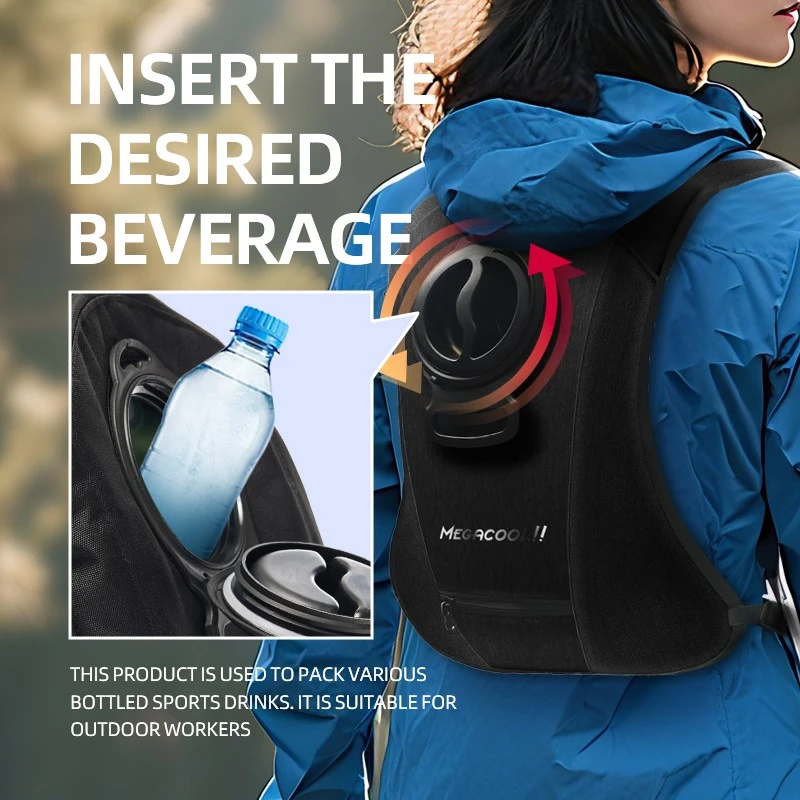
Modular Cooling: Extending Support from the Core Torso to the Neck
For hot-weather work, the core torso remains the most important cooling area. However, the neck, back of the neck and shoulders are also areas where users often feel heat buildup. This is why modular cooling design is becoming increasingly valuable.
With detachable interfaces, users can select neck cooling pads, shoulder-neck accessories or backpack cooling units based on workload, ambient temperature and wearing requirements. This allows the cooling system to adapt to different working conditions instead of relying on a single fixed structure.
However, compatibility with safety gear must be considered. If the user wears a safety helmet, reflective vest, protective clothing or tool harness, any cooling accessory must not affect helmet fit, impact protection, visibility or body movement. For construction, utility, road maintenance and industrial sites, cooling should prioritize the torso, back of the neck and shoulder area rather than making broad "full-body cooling" claims.
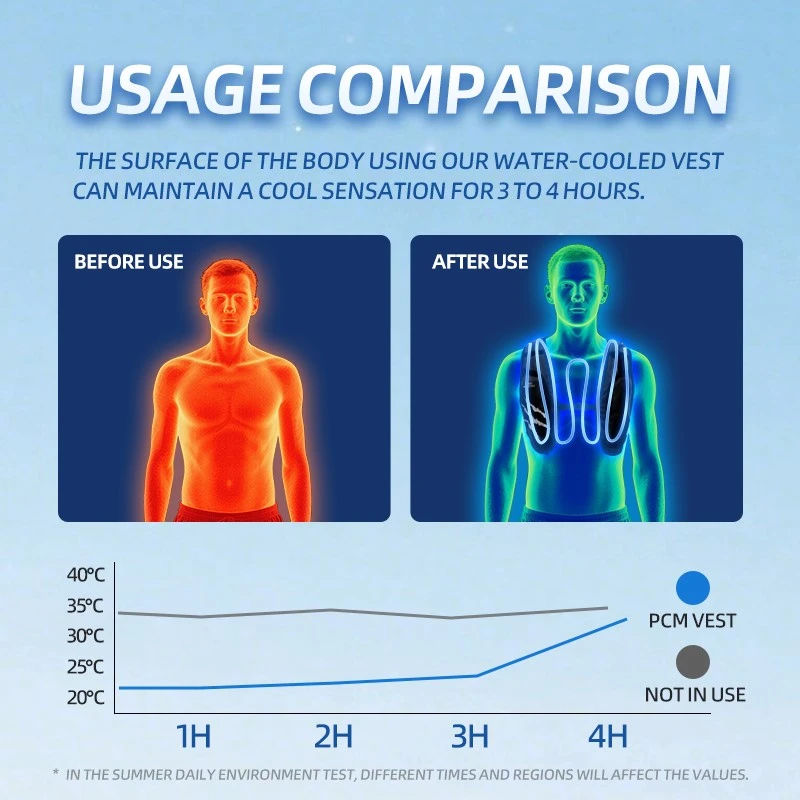
Lightweight Alternatives: Evaporative Cooling and PCM Cooling Vests
In addition to active water circulation systems, there are also lighter cooling options on the market, such as evaporative cooling vests and PCM cooling vests.
Evaporative cooling vests use water-retaining fabric and the heat absorption effect of water evaporation to provide cooling. Their advantage is simplicity: no pump, battery or water circulation unit is required. However, their performance depends heavily on humidity, airflow and outer-layer clothing. In humid, low-airflow or heavily covered environments, evaporation slows down and the cooling effect becomes weaker. Therefore, evaporative cooling is better suited for light to moderate outdoor activity rather than every high-heat industrial environment.
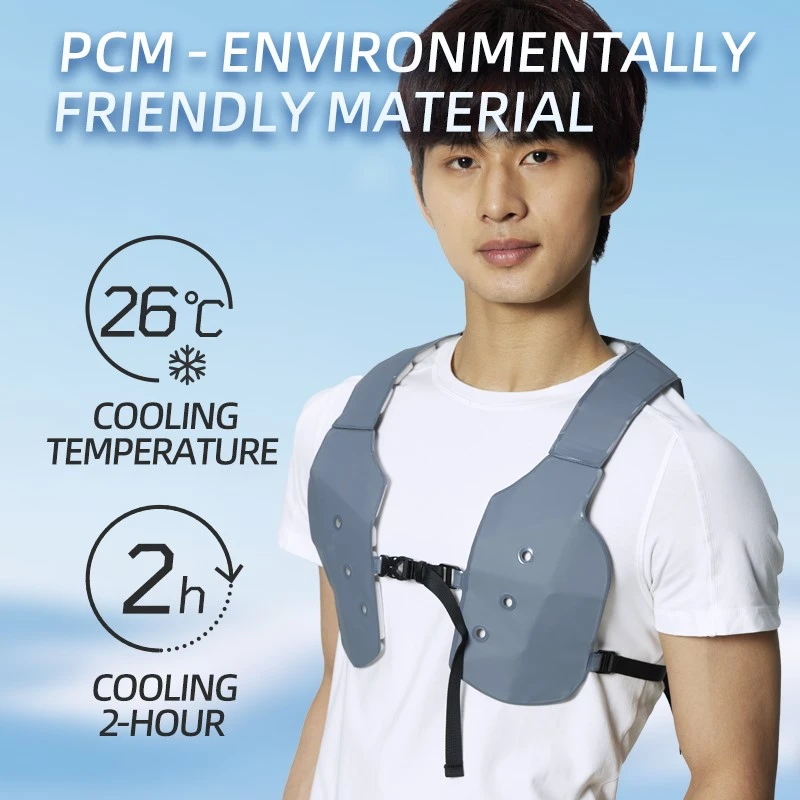
PCM cooling vests use phase change materials to absorb body heat and maintain a relatively stable cooling temperature. Compared with ice packs, PCM materials provide more controlled cooling and reduce the risk of excessive cold spots. Compared with active water cooling systems, PCM vests are easier to wear because they do not require a pump, ice-water reservoir or power supply. They are practical for commuting, light outdoor work, warehousing, kitchens, landscaping and short-duration heat exposure.
Choosing the Right Megacool Cooling Product
For users who need continuous cooling during long periods of activity in hot environments, active water circulation remains one of the stronger solutions. The Megacool Water Liquid Cooling Suit uses liquid circulation technology and is suitable for construction, manufacturing, outdoor sports and high-temperature work environments.
For users who need stronger ice-water circulation cooling in fishing, cycling, camping, outdoor work or similar environments, the Ice Vest Cooling Jacket is a practical option. Its micro pump circulates chilled water through the garment, delivering cooling support to the core torso area and helping reduce heat fatigue.
For users who prefer a lighter passive cooling solution without a pump, ice-water reservoir or power bank, the Megacool PCM Ice Vest for Humans provides a convenient alternative. It is suitable for high-temperature work, hiking, travel, home use, camping and other daily cooling scenarios.
Heat Protection Is Becoming a Key Part of EHS Management
Heat risk is not determined by air temperature alone. Humidity, radiant heat, wind speed, workload, protective clothing and individual physical condition all influence heat stress. Therefore, professional cooling equipment should be used as part of a broader heat-stress management plan, not as the only solution.
In real work environments, cooling vests should be combined with hydration, rest breaks, shade, heat acclimatization, job rotation and on-site heat monitoring. Water cooling vests, PCM vests and evaporative cooling vests each have their own advantages, and the best choice depends on task duration, heat level, humidity, mobility needs and protective equipment compatibility.
Looking ahead, wearable cooling equipment will continue to develop toward lighter weight, modular design, lower burden, better compatibility and more even cooling structures. Whether the product uses tube-based liquid circulation, flat-surface waterway cooling, PCM cooling or evaporative cooling, the real value lies in stable cooling performance, wearing comfort, safety compatibility and long-term reliability.