

In the advanced sectors of sports medicine, occupational safety, and personal thermal management, Phase Change Material (PCM) technology has redefined physiological temperature regulation. For global distributors, athletic organizations, and safety procurement officers, understanding the precise thermodynamic properties of PCM is essential for maintaining product efficacy. As a specialized manufacturer of wearable cooling gear, we recognize that the deployment of our products, such as the widely adopted PCM Women's Cooling Headband, spans diverse global climates. This technical paper addresses the scientific realities of storing and maintaining PCM cooling headgear in extreme cold environments.
The Physics of PCM: Embracing the Solid State To establish proper storage protocols, we must clarify a widespread market misconception regarding PCM crystallization. Unlike traditional water-based ice packs that expand violently upon freezing and damage their casings, industrial bio-based PCM exhibits minimal volumetric expansion during phase transition. In fact, a high-quality PCM Head Cooling Band is engineered to crystallize (solidify) naturally in any environment below its designated threshold (e.g., 18°C or 28°C). Therefore, a cold climate naturally preserves the PCM in its optimal, fully "charged" solid state. Attempting to prevent the material from freezing is thermodynamically counterproductive, as the solid state represents maximum latent heat capacity.

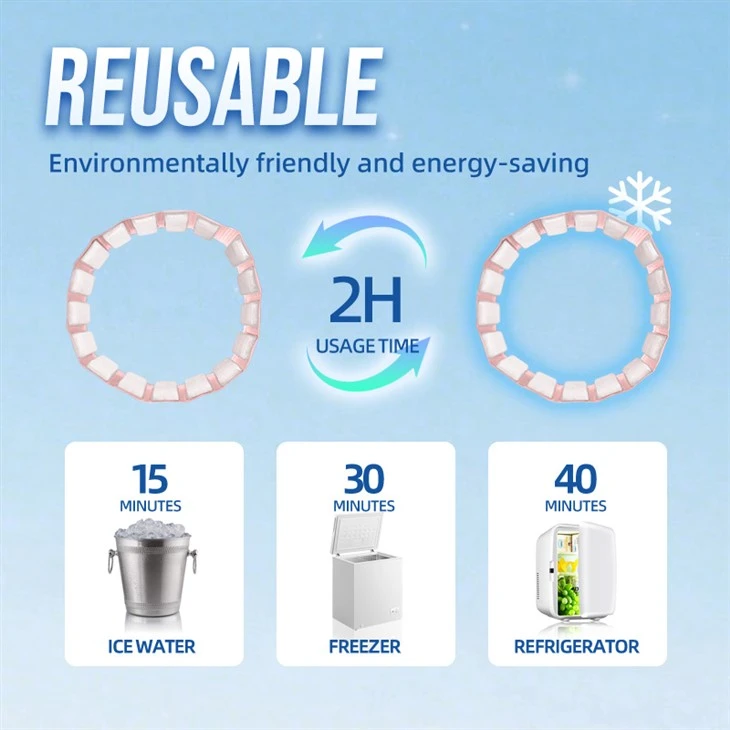
Addressing the True Hazard: TPU Embrittlement in Sub-Zero Conditions While the internal Phase Change Material thrives in the cold, the true engineering vulnerability in sub-zero climates (e.g., below -10°C) lies in the outer structural casing. To guarantee extreme durability, accessories like our PCM Multi-function Outdoor Cooling Neck Wrap are encased in high-frequency welded TPU (Thermoplastic Polyurethane). Although TPU is exceptionally resilient, prolonged exposure to deep sub-zero temperatures can temporarily increase polymer brittleness. If a completely frozen headband is violently folded, crushed, or dropped while in this embrittled state, micro-fractures can develop along the welded seams, compromising the hermetic seal.
Correct Storage and Activation Protocols To ensure the maximum lifespan of your PCM inventory during winter months or in cold-storage facilities, distributors and end-users must adhere to the following industrial guidelines:
- Flat, Uncompressed Storage: Headbands should be stored entirely flat in a stable environment. Never fold, crease, or place heavy objects on the products while they are fully crystallized, as this stresses the TPU seams.
- Thermal Acclimatization Before Flexing: If a shipment of PCM headbands has been stored in a freezing warehouse, allow the products to acclimate to a moderate indoor temperature (around 10°C - 15°C) before physically bending or fitting them to a user. This restores the TPU's natural elasticity.
- The Activation Reality: A critical error is attempting to "reactivate" a cold headband by placing it in a warm environment. Heat forces the PCM to melt, dissipating its stored cooling potential. If the band is solid, it is 100% ready for deployment against the skin to absorb metabolic heat.
Conclusion and OEM Partnerships Proper handling of PCM thermal management gear requires a strict understanding of material science. By recognizing that crystallization is the desired state and protecting the TPU casing from extreme cold-shock impacts, users can guarantee years of reliable performance. As a primary manufacturer, we enforce rigorous quality control to ensure our PCM products withstand demanding environmental variables. We invite global wholesalers and safety equipment distributors to contact our technical sales team to discuss bulk procurement, custom thermodynamic thresholds, and OEM manufacturing solutions tailored to your market.